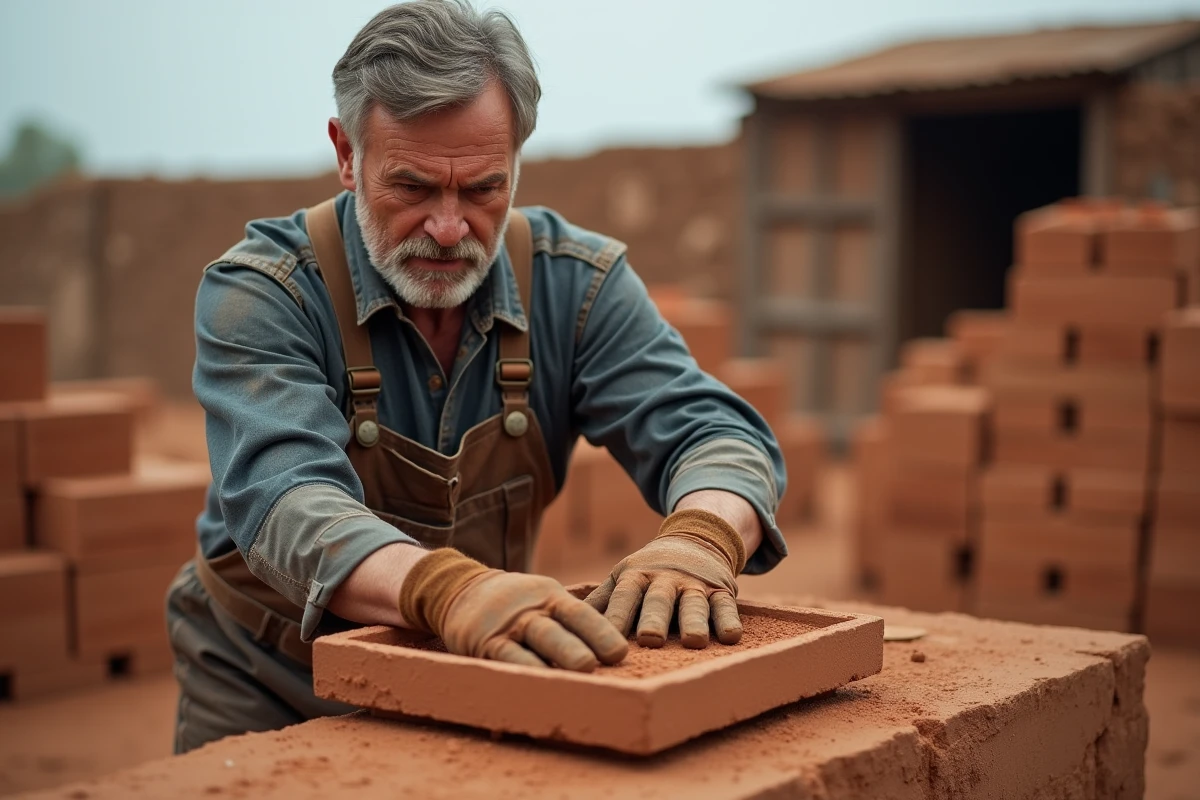
A brick placed on a wall seems simple. However, between the clay quarry and the construction site, it undergoes a series of transformations that determine its strength, insulation, and durability. The manufacturing of bricks relies on a precise sequence of steps where each technical choice, from the type of soil to the firing temperature, alters the properties of the finished product.
How the composition of clay affects the final brick
Not all clays are equal. Depending on the exploited deposit, the soil contains varying proportions of silica, alumina, and iron oxides. These variations directly influence the color, mechanical strength, and thermal behavior of the brick after firing.
A clay rich in iron oxide gives that characteristic red hue. A more calcareous clay produces yellow or ochre bricks. This is not just an aesthetic issue: the mineralogy of the clay determines the porosity and thus the brick’s ability to withstand moisture.
You can learn all about brick manufacturing by exploring the different families of clay and their uses in construction.
Even before shaping, the clay extracted from the quarry goes through grinding and then mixing with water. This step homogenizes the paste and eliminates stones or roots. Insufficient mixing creates cracks during firing, making the brick unusable as a load-bearing wall.
Raw brick or fired brick: two materials, two construction logics
The distinction between raw brick and fired brick is not just a matter of modernity. They are two materials with very different properties, suited to distinct climatic and structural contexts.
Raw brick, a low-energy impact material
Raw brick is simply dried in the sun or in the open air, without firing. It consumes very little energy to produce. However, it remains sensitive to moisture and is mainly suitable for dry regions or earth construction projects where the walls are protected by a coating.
Raw brick naturally regulates indoor humidity, making it a popular material in bioclimatic housing projects. Its mechanical strength, however, remains limited for load-bearing walls of several stories.
Fired brick, the standard for buildings
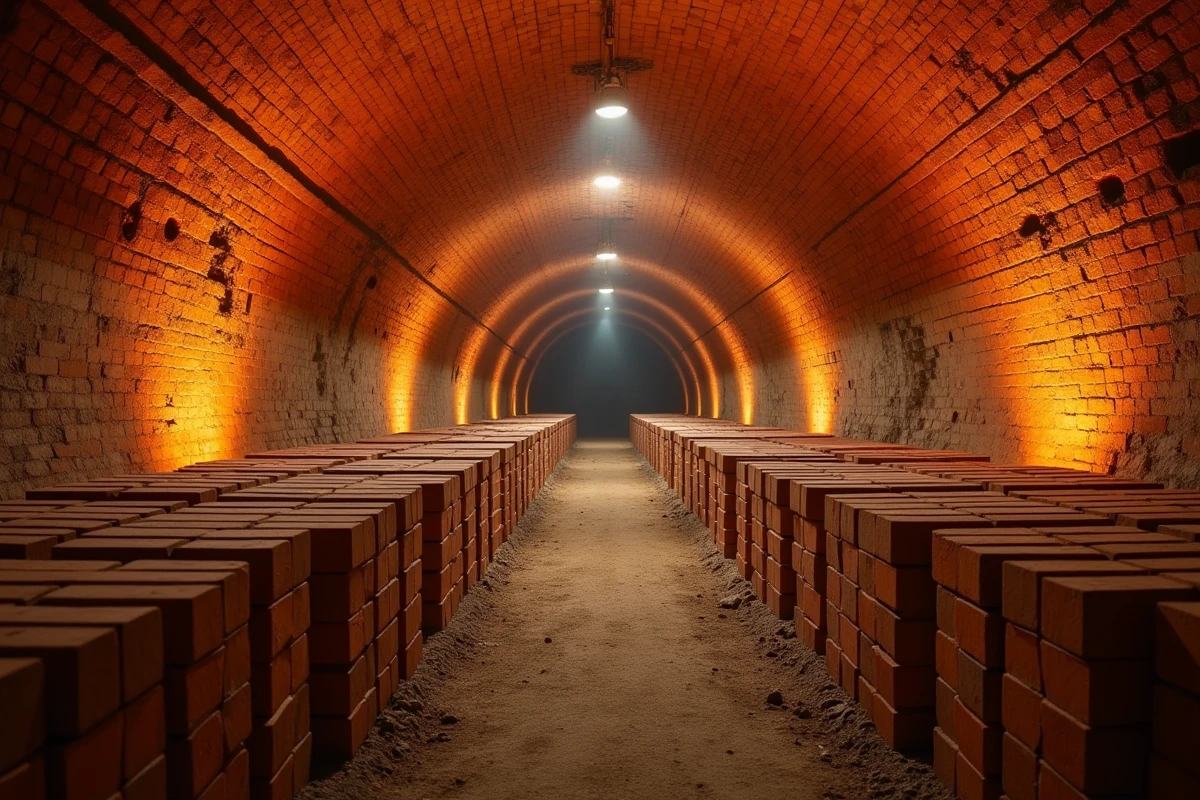
Firing radically transforms the earth. Passing through a high-temperature tunnel kiln, the clay particles partially fuse, a phenomenon called sintering. The result: a hard, stable material that is weather-resistant.
It is this firing that allows for bricks suitable for load-bearing walls of multi-story buildings. The temperature and duration of firing determine the final density, and thus the thermal insulation performance and compressive strength.
Firing bricks: why temperature changes everything
Firing is the most energy-intensive step in brick manufacturing. It is also the one that permanently sets the characteristics of the product.
A tunnel kiln operates continuously: raw bricks enter at one end, pass through progressively heated zones, and then exit fired at the other end. The temperature increase must be gradual to avoid thermal shocks that crack the pieces.
Have you ever noticed that some bricks sound hollow when tapped? This is often a sign of incomplete or too rapid firing, which leaves the heart of the brick insufficiently densified.
In recent years, several European manufacturers have begun to replace part of the fossil fuels with biogas or green hydrogen in mixtures. These industrial trials show a measurable decrease in CO₂ emissions per ton of fired brick, without significant degradation of mechanical performance. This transition remains gradual, but it profoundly alters the carbon footprint of the material.
Hollow geometry and thermal insulation of modern bricks
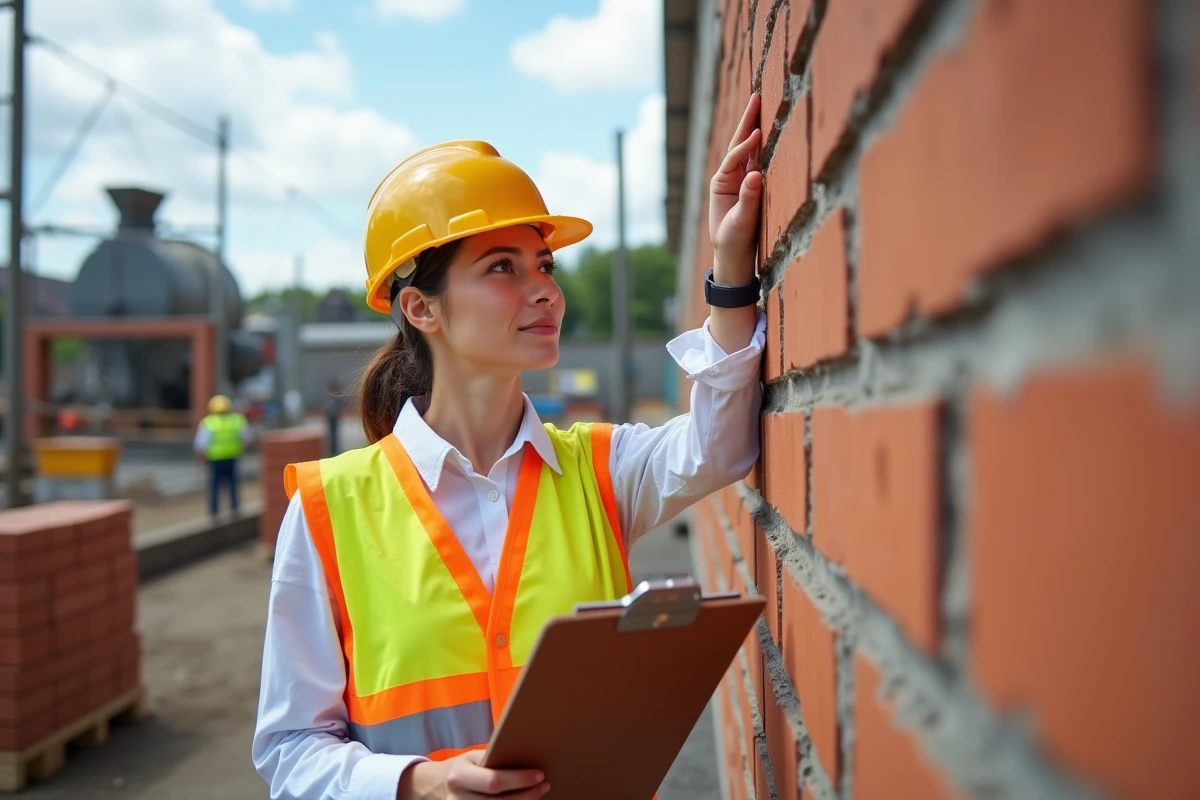
Traditional solid bricks have been largely replaced on most construction sites by hollow bricks. These internal cavities are not there by chance: they create air layers that slow down thermal conduction through the wall.
Brickworks are now designing increasingly complex hollow geometries to meet the requirements of RE2020, the French environmental regulation that gradually came into effect starting in 2022. The goal: to reduce the carbon footprint of buildings over their entire life cycle.
In practical terms, recent developments focus on several areas:
- Rectified bricks: their faces are ground to allow for a thin joint (a few millimeters instead of one centimeter), which reduces thermal bridges between each row
- Insulating filling of the cavities with rock wool or perlite, to achieve thermal performance close to that of a timber frame wall
- Incorporation of local waste (sawdust, biomass ash) into the clay paste before firing, creating controlled porosity that lightens the brick and improves its insulating power
These modern bricks allow for the construction of load-bearing walls that provide both structure and a significant portion of insulation, without the need for systematic interior cladding.
Co-utilization of waste in the clay paste: a concrete avenue
The incorporation of residues in brick manufacturing is not a theoretical concept. Several recent studies document the addition of sewage sludge, marble waste, or sawdust directly into the clay mixture.
The principle is simple: these organic or mineral materials burn or react during firing, leaving behind micro-cavities. This controlled porosity reduces the bulk density and thermal conductivity of the brick.
The observed trade-off is generally favorable: mechanical strength decreases slightly but remains compatible with lightweight load-bearing masonry. This is an avenue of interest for brickworks looking to reduce their consumption of virgin raw materials while improving the performance of their products.
The manufacturing of bricks remains an industrial process where each parameter, from the quarry to the kiln, impacts the construction site. Recent developments, whether in decarbonized fuels or optimized geometries, show that this millennia-old material continues to adapt to the contemporary constraints of building.