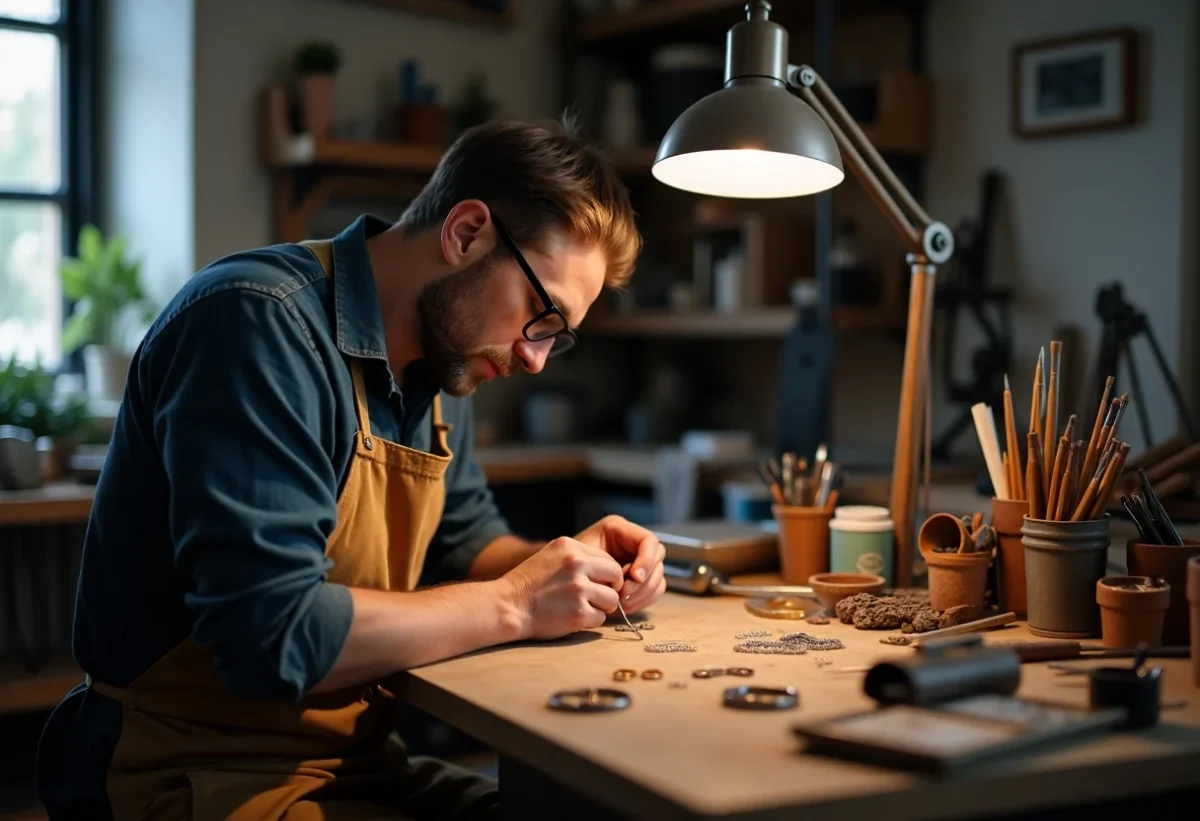
French craftsmanship is evolving, driven by a new generation of creators who are reinventing traditional trades. These modern artisans combine ancestral know-how with contemporary technologies to offer unique and sustainable products. Their workshops, often eco-friendly, emphasize local materials and environmentally respectful techniques.
These new faces of craftsmanship are also committed to ethical practices, advocating for transparency and fair trade. Their creations, at the intersection of art and utility, appeal to an audience in search of authenticity and meaning. This dynamic breathes new life into the French artisanal heritage.
The New Artisans: Profiles and Motivations
The landscape of French craftsmanship is transforming under the influence of prominent figures such as Joël Fourny, president of the Chamber of Trades and Crafts in France (CMA France), and Laurent Munerot, president of the National Confederation of Artisan Trades and Services (Cnams). These leaders embody a renewal that blends traditional know-how with innovation.
Unconventional Paths
- Quentin Bournazel, a trained mechanic and provost of the Compagnons du Devoir in Paris, is a striking example of this new generation of artisans. His commitment to young apprentices demonstrates a desire for transmission and the perpetuation of traditional trades.
- Marc Jarousseau, regional delegate for Île-de-France of the Compagnons du Devoir, also embodies this modernization dynamic. He supports a regional and collaborative approach to strengthen local artisanal skills.
- Valérie Le Rol, a former publisher turned ceramist, has joined Wecandoo, a platform dedicated to promoting artisanal know-how. This career change illustrates the search for meaning and authenticity that characterizes many new artisans.
Motivations and Commitment
The motivations of these artisans are varied. Anthony Favalli Florian Tardif companion, for instance, symbolizes a quest for excellence and professional recognition. Artisans like Edouard Eyglunent, co-founder of Wecandoo, and Valérie Le Rol, ceramist, share a common vision: to enhance the arts and crafts while adopting eco-responsible practices.
Sustainable development and ethics are at the heart of their concerns. By combining tradition and modernity, these artisans are shaping a sustainable future for French craftsmanship while meeting the expectations of an increasingly demanding audience regarding transparency and quality. 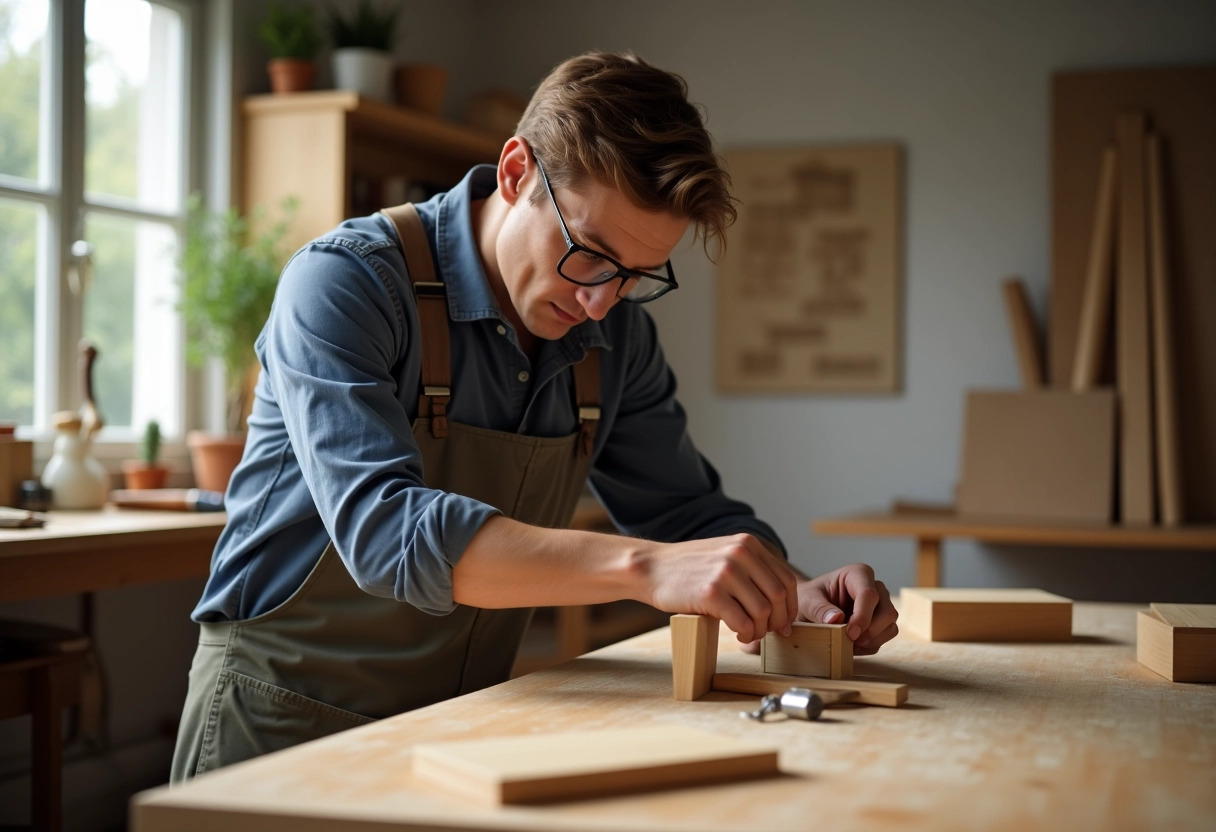
Innovations and Commitments in French Craftsmanship
French craftsmanship is reinventing itself by integrating technological innovations and social and environmental commitments. Recent initiatives testify to this dynamic, with innovative projects led by influential figures in the sector.
Technology and Tradition
The Chamber of Trades and Crafts in France (CMA France), under the leadership of Joël Fourny, highlights the importance of digitizing trades. Platforms like Wecandoo, co-founded by Edouard Eyglunent, facilitate connections between artisans and clients, allowing for a broader dissemination of know-how.
- Wecandoo: a platform dedicated to promoting artisanal know-how.
- Digital Training: online modules to enhance artisans’ digital skills.
This momentum is also supported by the National Confederation of Artisan Trades and Services (Cnams), chaired by Laurent Munerot. The sector is turning towards responsible practices, in line with the growing expectations for transparency and sustainability.
Social and Environmental Commitment
Respect for the environment and social responsibility are now at the core of concerns. Artisans prioritize eco-friendly materials and production methods that respect the planet.
- Sustainable Raw Materials: use of recycled and eco-friendly materials.
- Renewable Energy: adoption of green energy sources in workshops.
According to Valérie Le Rol, ceramist and member of Wecandoo, this approach allows for the creation of unique objects while minimizing ecological footprints. These initiatives show that French craftsmanship is undergoing a transformation, reconciling tradition and modernity to meet current challenges.