
Tingling in the hands, pulsations in the skull, diffuse warmth in the chest: these manifestations often destabilize practitioners, including those who have been meditating for several years. They signal neither a dysfunction nor a mystical progression. They result from specific physiological mechanisms that we detail here.
Neurophysiological mechanisms of bodily sensations in meditation
When mental agitation decreases, the somatosensory cortex receives proprioceptive signals with less attentional filtering. The body continuously sends information about skin temperature, local blood pressure, and micro-muscle contractions. Normally, the flow of thoughts and external stimuli mask these signals. Meditation removes this background noise.
We observe that prolonged immobility alters peripheral blood circulation. The capillaries in the extremities dilate or contract in response to decreased muscle tone. This vasomotor phenomenon produces the famous tingling, prickling, or sensations of warmth that practitioners most often describe in the palms and soles of the feet.
Slowed breathing also plays a direct role. A low respiratory rate leads to a slight change in blood CO2 levels. Even minimal, this variation is enough to provoke sensations of lightness, floating, or chest pressure. It is not clinical hyperventilation, but a normal adjustment of the autonomic nervous system when the body shifts into a dominant parasympathetic mode.
It is quite common to experience physical sensations during meditation without it indicating a medical problem. The difficulty lies more in the interpretation that the meditator places on these signals.

Physical sensations in meditation: distinguishing benign from pathological
Not all sensations are equal. The majority are benign, but a small number warrant clinical attention. We recommend a simple triage based on three criteria.
- The sensation appears only during practice and disappears within minutes after the session ends. This is the typical case of tingling, vibrations felt in the hands, or pulsations in the temples. These manifestations are related to immobility and vascular redistribution.
- The sensation persists for several hours after meditation, accompanied by significant pain or intense dizziness. In this case, medical advice is necessary, not because meditation is the cause, but because it may have revealed a pre-existing signal (cervical tension, vestibular disorder, circulatory problem).
- The sensation triggers strong emotional distress, a feeling of depersonalization, or loss of control. Clinical mindfulness approaches in mental health adapt exercises to observe these reactions with distance. Support from a trained instructor is preferable to solitary practice.
A transient tingling is an amplified proprioceptive signal, not a symptom. This distinction is sorely lacking in most forums and mainstream content, which mix anxious testimonies and esoteric interpretations without ever establishing a clear physiological framework.
Why focused attention amplifies bodily sensations
The mechanism of perceptual amplification is well documented in attention neuroscience. Deliberately directing awareness to a bodily area increases the corresponding cortical activity in the somatosensory cortex. Specifically, when a body scan exercise asks to focus attention on the right foot, the cortical representation of that area receives more attentional resources.
This phenomenon explains why experienced practitioners perceive finer sensations, not less. The common belief that meditation “calms the body” is partially misleading. Regular practice sharpens bodily perception rather than diminishing it. Muscle tensions, micro-joint pains, thermal variations become more pronounced.
This heightened sensory acuity is not a side effect. It is precisely the goal of mindfulness-based practices: to observe the body’s signals during rest to better understand its automatic responses to stress, fatigue, or pain. Laval University also integrates meditation into a broader well-being approach, where this bodily listening serves as a foundation for self-regulation.
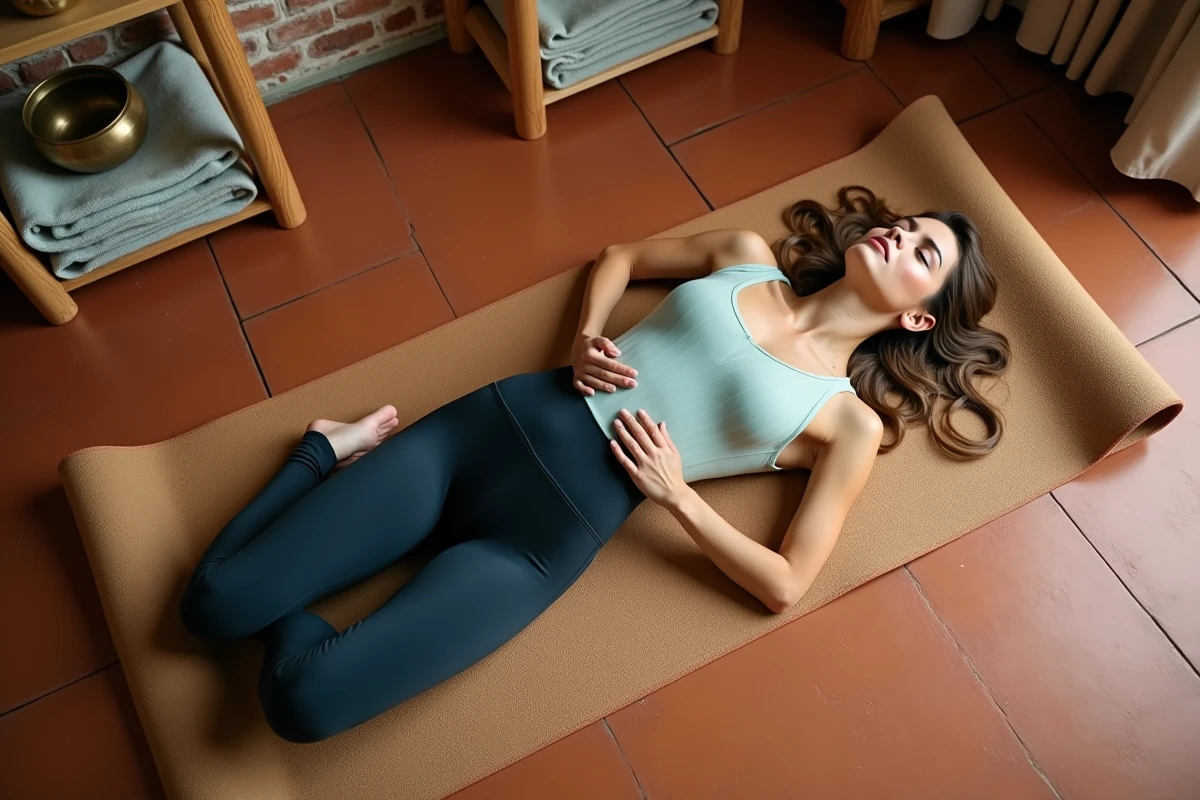
Attitude towards sensations during meditation practice
The most counterproductive reaction is to analyze the sensation in real-time. The meditator who wonders “why are my hands tingling” shifts from observation to rumination. The exercise then transforms into an anxious loop: sensation, interpretation, worry, increased muscle tension, amplified sensation.
We recommend a three-step approach:
- Name the sensation with a neutral word (warmth, pressure, vibration) without associating it with judgment or cause.
- Maintain attention on the breath as the primary anchor. The sensation remains in the peripheral field of consciousness without becoming the main focus.
- If the sensation becomes uncomfortable, adjust the posture. Changing position is not a meditative failure. Forced immobility generates real nociceptive signals that have no contemplative value.
Clinical mindfulness protocols never require “to endure” physical pain. This injunction, common in certain currents, confuses endurance with attentive presence. Observing tension is useful. Inflicting joint pain through postural rigidity is not.
The body continuously produces signals. Meditation does not create these signals; it clears the attentional space necessary to perceive them. Knowing that this mechanism is commonplace, reproducible, and safe in the vast majority of cases is usually enough to diffuse the anxiety that accompanies the first sessions.