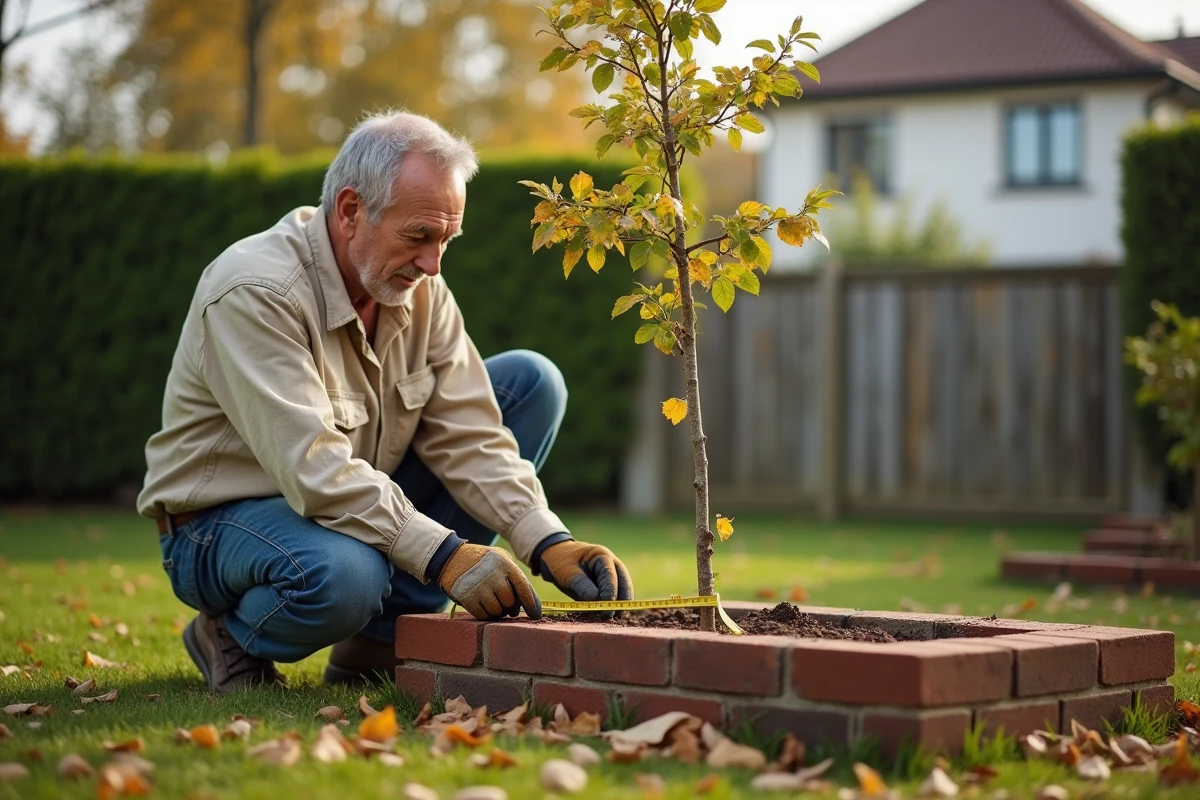
The planting distance of a tree in relation to a dwelling is not just a matter of common gardening sense. It affects the longevity of foundations, insurance coverage, and, since recent drought episodes, compliance with the increasing requirements of home insurance companies. We observe that the majority of claims related to roots could have been avoided through a cross-analysis of the soil, the chosen species, and the position of buried networks.
Shrink-swell of clays and root-foundation interaction: the technical mechanism
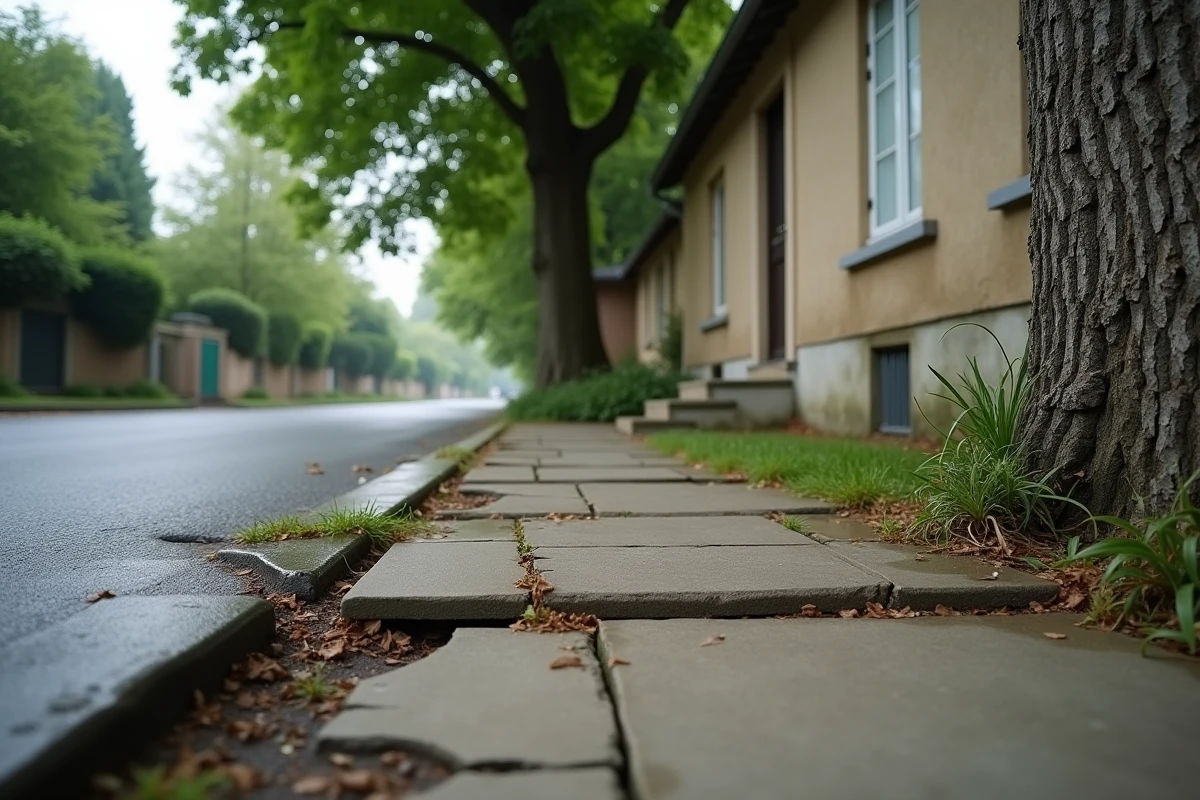
On clay soil, a tree planted too close to a house creates a localized water differential under the foundations. The roots absorb water from the soil during the growing season, causing the clay ground to shrink. Conversely, in winter, the soil swells again. This seasonal cycle generates differential movements that crack load-bearing walls and pavements.
The phenomenon worsens when a buried rainwater collection tank is nearby. Geotechnical study offices report, in their 2023-2024 assessments, an increase in expertise for cracks related to the combination of a nearby tree, buried tank, and clay soil. The tank locally alters the water regime and amplifies the effect of the roots on the foundations.
The NF P94-500 standard, revised in 2024, regulates soil study missions. Before planting a tree within a few meters of a building on clay soil, we recommend consulting the G2 geotechnical study of the lot. It specifies the soil’s sensitivity to shrink-swell and allows determining whether knowing how far to plant a tree from a house requires a greater setback than generic recommendations.
Planting distances in French law: article 671 of the Civil Code and local decrees
Article 671 of the Civil Code sets two default thresholds. Plantings over two meters in height at maturity must be located at least two meters from the property line. Those of two meters or less should be planted at a minimum of fifty centimeters. These distances are measured from the center of the trunk to the property line, not to the wall of the neighboring house.
These thresholds are only a legal minimum. Several metropolitan areas impose stricter distances or requirements by species.
- The Lyon Metropolis, in its revised Tree Charter of 2023, details setback recommendations adapted to the root development of each tree category.
- Toulouse Metropolis, through its Tree Heritage Management Guide (2024 edition), incorporates the concept of root influence zone to protect networks and foundations.
- Some municipalities classified in shrink-swell zones may condition urban planning permits on a minimum setback of plantings from existing constructions.
The municipal regulation takes precedence over the Civil Code when it imposes greater distances. Checking the PLU and municipal decrees before planting avoids disputes between neighbors and refusals of coverage by the insurer.
Home insurance and nearby trees: the new requirements of companies
After the droughts of 2022-2023, insurers have tightened their stance. According to the French Insurance Federation (report updated in 2024), some companies condition the coverage of root-related claims on proof that the tree complied with the distances recommended by the DTUs or municipal decrees at the time of the incident.
In practice, this means that a tree planted one meter from a facade, even with the tacit agreement of the neighbor, may lead to a refusal of compensation if cracks appear. Keeping the delivery note of the tree and a scaled planting plan is a basic precaution to justify compliance with distances in case of a dispute.
Shrink-swell and natural disaster deductible
Damage related to the shrink-swell of clays falls under the natural disaster regime only if an interministerial decree is published. Without a decree, the incident remains the responsibility of the owner, unless there is a specific clause in the contract. The proximity of a tree then becomes an aggravating factor that the expert appointed by the insurer will systematically note.
Buried networks and tree planting: forgotten safety distances
Popular articles focus on foundations. However, underground networks pose at least equally costly problems. Enedis, in its 2023 guide, and GRDF, in its safety sheet of the same year, remind us of the setback rules for plantings near low-voltage electrical conduits and gas pipelines.
- Roots that reach an electrical sheath cause short circuits and outages. The owner of the tree is liable.
- On gas pipelines, root intrusion weakens joints and can cause leaks. GRDF requires a minimum setback and may impose tree removal in case of proven risk.
- Sewage networks and peripheral drains are the primary targets of roots seeking moisture. A willow or poplar planted nearby will block a collector within a few years.
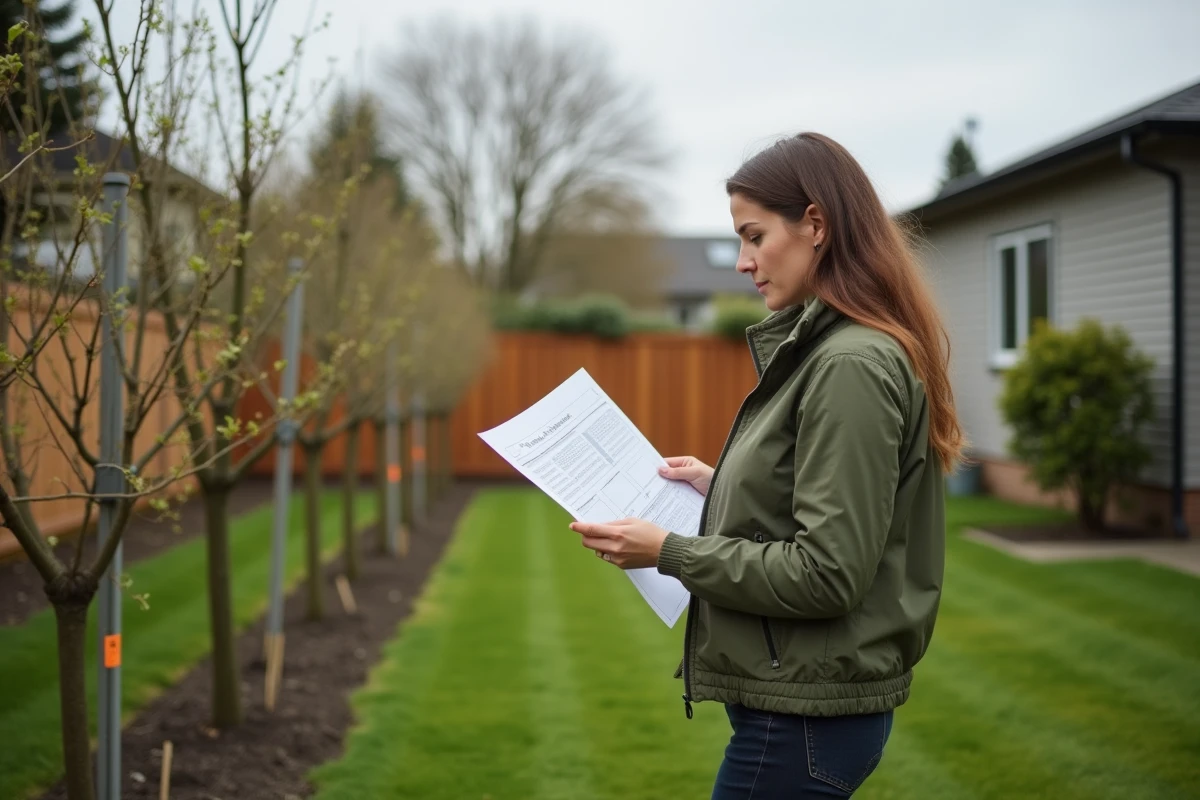
Requesting a network plan from the town hall or via the single window before planting helps avoid these situations. The cost of consulting the network cadastre is negligible compared to a gas pipeline repair.
Choice of species and actual setback distance
The legal distance of two meters at the property line does not correspond to the safety distance from a building. An oak or plane tree develops a root influence zone that far exceeds this threshold. We recommend reasoning based on the radius of the crown at maturity: the root influence zone extends at least to the vertical projection of the crown, often beyond.
For planting in immediate proximity to a dwelling, species with invasive root systems (poplar, willow, black locust) should be excluded. Trees with taproots and moderate growth (hornbeam, field maple, ornamental pear) offer a safer compromise, provided that a sufficient setback from foundations and networks is respected.
Planting a tree near a house remains a trade-off between benefits (shade, heritage value, thermal comfort) and technical constraints. A cross-diagnostic of the soil, networks, and chosen species, conducted before planting, avoids most of the claims we observe on the ground.