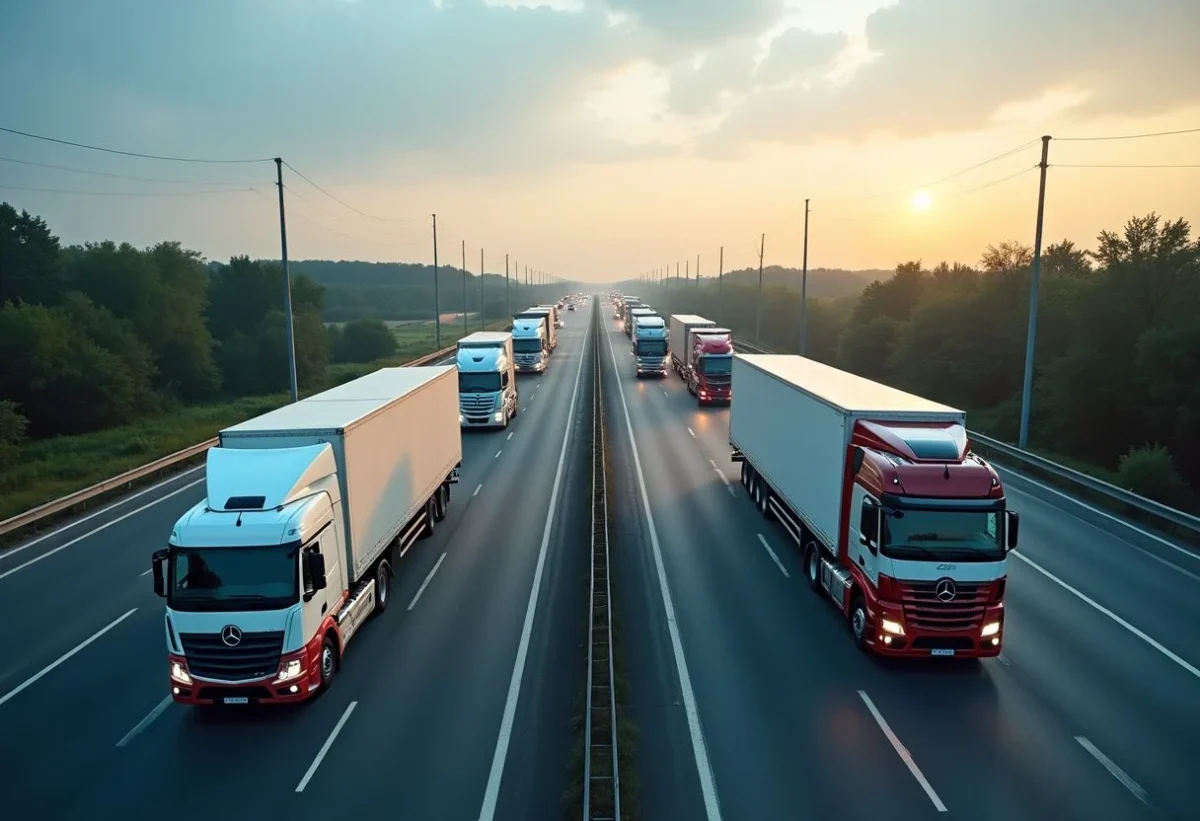
The United Kingdom, with its rich historical heritage and economic dynamism, attracts numerous trade exchanges around the world. At the heart of this economic machinery are the carriers, indispensable pillars for the smooth functioning of exchanges between the British Isles and the rest of the world. In a post-Brexit landscape where the rules of the game have changed, carriers in England play a more vital role than ever.
The strategic importance of carriers in England
What are the economic drivers that place carriers at the heart of the English economy? Their essential roles, beyond the simple movement of goods, deserve in-depth analysis.
Carriers do not merely move goods from point A to point B. They orchestrate a complex ballet that ensures the fluidity of international supply chains. England, due to its advantageous geographical position, acts as a bridge between Europe, the Americas, and Asia. This central role involves meticulous management of inventory, timelines, and costs.
Moreover, the post-Brexit economic context has reinforced this role, highlighting the challenges related to new customs regulations. Logistics operators must now navigate a constantly evolving legislative framework while maintaining customer satisfaction and optimizing costs.
The challenges faced by English carriers
In a constantly changing global environment, carriers face multiple obstacles, the resolution of which is essential to ensure their sustainability.
- Post-Brexit customs regulations: Navigating a constantly evolving legislative landscape requires sharp expertise and unwavering adaptability.
- Ecological transition: Reducing the carbon footprint of transport while maintaining competitive costs is a major challenge.
- Information technologies: The integration of advanced digital solutions to optimize routes and loads has become essential.
- Securing supply chains: The increasing threats of cyberattacks or logistical disruptions require robust strategies.
Innovations and solutions in the English logistics sector
The quest for efficiency and sustainability drives carriers to continuously innovate. What are the innovation levers transforming transport in England?
Emerging technologies, such as artificial intelligence and the Internet of Things, are radically transforming logistics management. By integrating AI, carriers can accurately predict demand, thus optimizing routes and reducing unnecessary costs. The IoT, for its part, enables seamless traceability of goods, ensuring transparency throughout the supply chain. The transporteur angleterre provides an overview of best practices and ongoing innovations.
Furthermore, the sector is gradually moving towards decarbonizing transport. Electric vehicles, although costly to purchase, are increasingly favored to reduce carbon footprints. Charging infrastructure is improving, facilitating their large-scale adoption.
The future of carriers in England
What horizons are emerging for carriers in England and how is the sector preparing for future challenges?
- Continuous adaptation: Carriers will need to adapt to market fluctuations and customer needs to remain competitive.
- Investment in skills: Ongoing training of teams on new technologies and regulations is essential to cope with changes.
- Strategic partnerships: Collaborating with technology players and regulatory experts will strengthen the sector’s resilience.